
Moving from start-up to scale up reflects greater certainty about the core elements of the business.
You have customers and suppliers and you have dealt with many problems around quality, customer service, costings and pricing.
Your brand is becoming known and your marketing is building your presence on social media and possibly wider.
You feel confident negotiating with customers and suppliers. You are starting to get repeat orders from customers.
Yet you’re still concerned about the scale up and the uncertainty of so many things:
-
Global issues such as interest rates, tariffs, tax changes – a long list of things outside your control.
-
Internal concerns about building the right team.
-
Your own role as founder and now a leader and manager
It is the state of not being entirely sure about what will happen in a given situation. Uncertainty can arise from various factors, including incomplete information, randomness, complexity, and ambiguity.
-
Incomplete information
-
We never know everything so we have to make do with what we have
-
If we pursue complete information we will never succeed and the business will stall from lack of decisions
-
-
Randomness
-
There a rarely clear patterns around situations
-
People can behave in unpredictable ways which we may never understand – but they have an impact which we must cope with
-
-
Complexity
-
Every organisation is a complex system operating in a complex environment
-
We have to understand and manage the complexity (see below)
-
There will always be unintended consequences as we can’t anticipate every eventuality
-
-
Ambiguity
-
What you see may not be what’s really happening
-
Sometimes you have to stand back and watch situations develop
-
The following model helps prioritise the uncertainties:
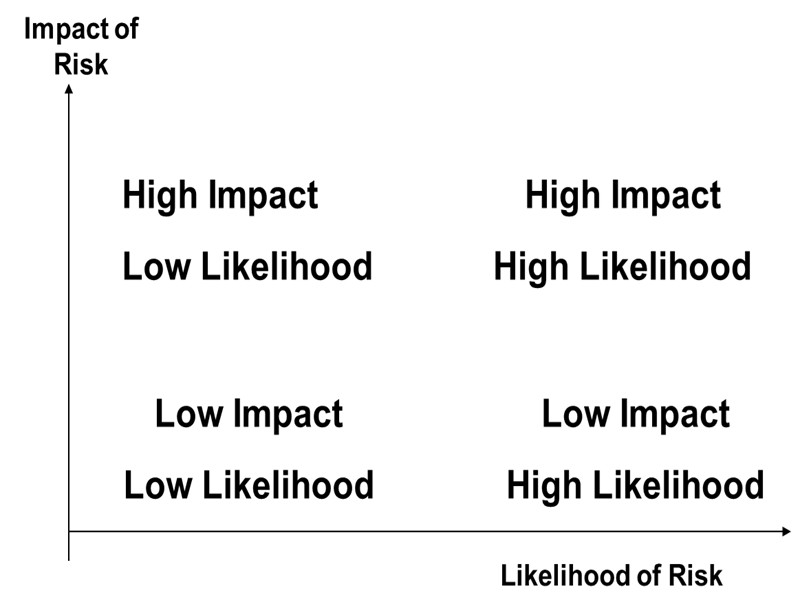
Each quadrant needs a plan, keeping it simple:
High Impact/High Likelihood – critical to your survival. Needs a clear risk assessment of the impact on the business and how to manage potential damage.
High Impact/Low Likelihood – the risk might be rare but you need a back-up plan in the event it happens. Can you access the necessary resources at short notice?
Low Impact/High Likelihood – these risks need to be managed as part of the structure and systems in the organisation, eg supplier quality issues.